Introduction
The “letter h coloring page” offers a simple yet powerful gateway for young learners to explore alphabetic symbols while refining motor skills. In early childhood settings, a single sheet of printable paper can spark curiosity, encourage concentration, and lay the groundwork for future reading success. When children choose a hue and trace the bold, lowercase “h,” they simultaneously practice hand‑eye coordination, recognize a new letter shape, and engage in creative decision‑making. The page is designed for ages 2–8, making it adaptable for toddlers who are just beginning to hold a crayon and for early elementary students who are ready to experiment with shading techniques. This article outlines the page’s features, developmental benefits, and practical strategies for educators, parents, and homeschool families.
💡 Activity Key Takeaways:
- Core Focus: Printable Letter H Coloring Page designed for creative expression and fine-motor coordination.
- Target Scope: Ideal for toddlers, preschool, kindergarten, and classroom art activities.
- Best Recommendation: Use standard heavy printer paper (24–28 lb) or cardstock for vibrant results with crayons, colored pencils, or washable markers.
What This Coloring Page Features
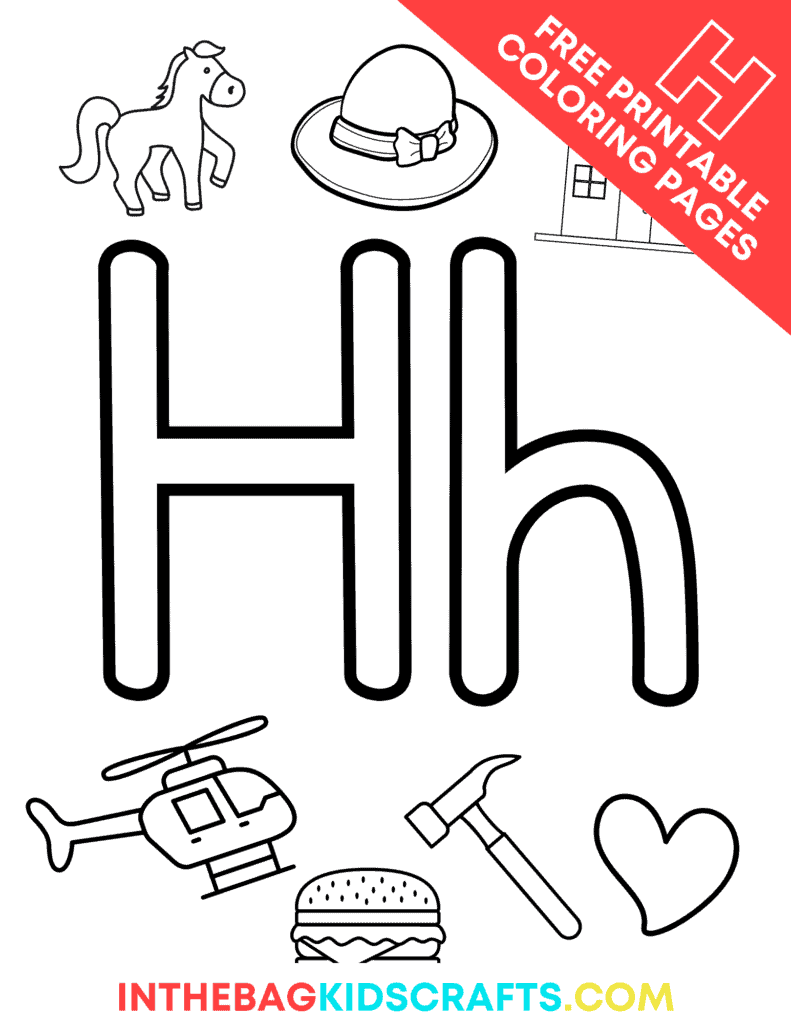
A clean, high‑contrast outline of the lowercase “h” dominates the center of the sheet, surrounded by whimsical doodles that invite color exploration. The design includes a friendly hamster, a handful of honeycombs, and a tiny house—elements that naturally reinforce the target letter through contextual cues. The line work is thick enough for small grips yet detailed enough to encourage fine‑motor precision. Printable at any size, the page can be printed on standard letter‑size paper or scaled for larger formats, allowing teachers to create classroom displays or individual activity sheets. The inclusion of related objects supports phonemic awareness, while the open spaces encourage children to add their own drawings, turning a simple coloring task into a mini‑illustration project.
Key Developmental Benefits
Coloring the “h” engages multiple domains of development. Fine motor control improves as children manipulate crayons, markers, or colored pencils; the action of staying within the lines strengthens wrist stability and finger dexterity. Cognitive growth is evident when children identify the letter, associate its sound, and connect it to familiar words like “hat” or “horse.” Emotional regulation benefits as children experience a sense of accomplishment after completing the page, fostering self‑esteem and perseverance. Social interaction often emerges in group settings, where peers share color ideas and discuss the letter’s appearance, reinforcing language skills through collaborative dialogue. According to the National Association for the Education of Young Children (NAEYC), play‑based activities such as coloring align with Developmentally Appropriate Practice, supporting holistic growth across cognitive, physical, and social‑emotional areas.
How to Use This Coloring Page
The page can be introduced during a morning circle, a language‑arts block, or as a calm‑down activity after active play. Begin by displaying the “h” on a large easel, naming its sound, and inviting children to locate the letter in books or classroom labels. Distribute the printable sheets along with a selection of coloring tools, and allow each child to choose a color palette that feels appealing. Encourage observation of the surrounding illustrations, prompting questions such as “What is the hamster doing?” or “How many honeycombs can you find?” This dialog reinforces vocabulary while keeping the focus on the target letter. Once coloring is complete, display the artwork on a bulletin board to celebrate effort and to create a visual alphabet gallery.
Practical Tips for Parents and Teachers
Provide a variety of writing implements—thick‑handled crayons for toddlers, fine‑tip markers for older children—to accommodate differing grip strengths. Position the page on a stable surface at eye level to reduce shoulder strain and promote proper posture. For children still developing a tripod grasp, a brief hand‑strengthening activity (such as squeezing a soft ball) can precede coloring and enhance grip endurance. Incorporate color theory basics by naming primary and secondary hues, turning the activity into an informal lesson in color mixing. When using the page in a classroom, pair it with a short story featuring the letter “h” to deepen literacy connections. Finally, encourage children to name their chosen colors aloud, supporting language development and reinforcing auditory discrimination.
Age-Appropriate Recommendations
For toddlers (2–3 years), focus on broad strokes and the act of holding a crayon. At this stage, the CDC notes that basic hand‑eye coordination is emerging, and exposure to simple shapes aids neural pathway formation. For preschoolers (4–5 years), introduce the concept of staying within the lines and discuss the sound of the letter “h.” According to the CDC,
75% of children ages 3–5 can draw a recognizable person — CDC
indicating that fine motor skills are sufficiently developed to attempt more detailed coloring. Early elementary learners (6–8 years) can add shading, texture, and personal embellishments, turning the page into a mini‑art project that reinforces letter recognition while nurturing creativity. Aligning activities with the NAEYC Developmentally Appropriate Practice framework ensures that each child receives challenges that match their current developmental stage, promoting steady progress without frustration.
Frequently Asked Questions
Answers below address common concerns about downloading, developmental impact, and reputable guidance.
Explore More Free Printable Coloring Pages
The “letter h coloring page” is part of a broader collection that supports thematic learning. Families seeking seasonal activities can browse the Holiday Object category for festive illustrations that reinforce holiday vocabulary. Those interested in expanding alphabet practice may explore additional Character pages featuring friendly mascots that highlight other letters. For nature‑focused lessons, the Animal section offers creatures whose names begin with the target letter, reinforcing phonemic connections. Finally, a diverse range of Coloring templates provides endless opportunities for creative expression across subjects. Each printable is designed for easy download, simple printing, and immediate use in any learning environment.
Printable Coloring Page Previews




Discover the educational benefits of the free “letter h coloring page” for ages 2–8. Learn how this printable supports fine motor skills, letter recognition, and creative development, with practical tips for parents, teachers, and homeschoolers. Q: How can the page be downloaded and printed? A: The file is available as a PDF on the website; click the download button, open the PDF, and print on standard 8.5×11‑inch paper. Q: In what ways does coloring aid fine motor and creative development? A: Coloring strengthens grip, refines wrist movement, and encourages decision‑making about color choices, all of which foster motor precision and imaginative thinking. Q: Which trusted organization supports the use of coloring for early learning? A: The National Association for the Education of Young Children (NAEYC) recommends coloring as a developmentally appropriate practice.
Key Specifications & Age-Group Overview
| Age / Grade Group | Target Skill Focus | Recommended Medium |
|---|---|---|
| Toddlers (Ages 2–4) | Hand-eye coordination & broad motor grasp | Jumbo crayons & washable finger paints |
| Early Elementary (Ages 5–7) | Line boundaries & fine pencil control | Standard colored pencils & fine-tip markers |
| Intermediate (Ages 8+) | Color blending, shading & artistic patience | Watercolor pencils, gel pens & dual-brush markers |