Introduction
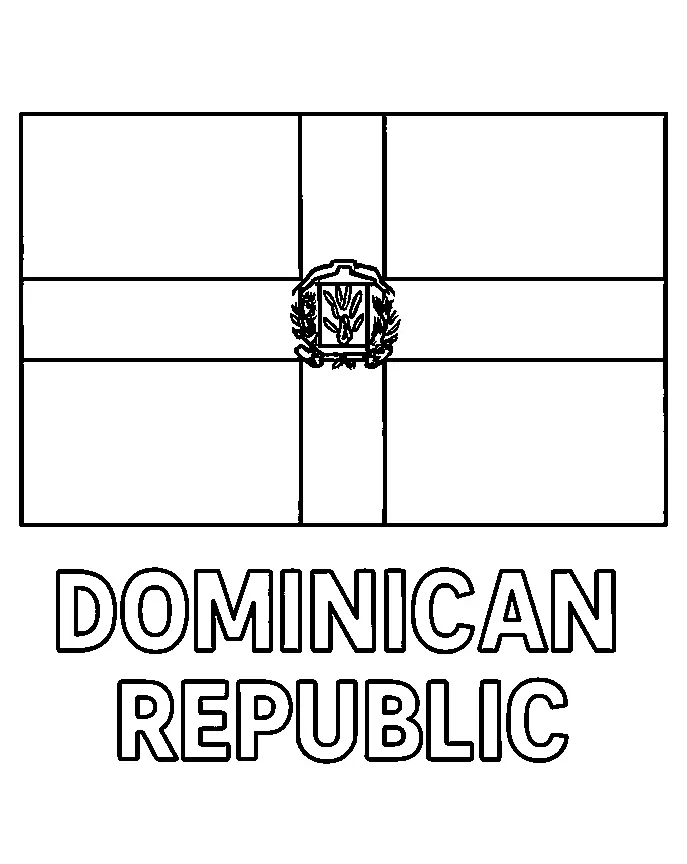
A free printable titled “Dominican Republic Flag Coloring Page” offers a vibrant gateway for young learners to explore geography, color theory, and cultural pride. Designed for children ages 2–8, the page balances bold outlines with simple shapes, making it accessible for early scribblers while still inviting more precise coloring from older preschoolers. The layout mirrors the flag’s distinctive tricolor—blue, white, and red—providing a clear visual cue that supports language development as children name each hue.
💡 Activity Key Takeaways:
- Core Focus: Printable Dominican Republic Flag Coloring Page designed for creative expression and fine-motor coordination.
- Target Scope: Ideal for toddlers, preschool, kindergarten, and classroom art activities.
- Best Recommendation: Use standard heavy printer paper (24–28 lb) or cardstock for vibrant results with crayons, colored pencils, or washable markers.
What This Coloring Page Features
The illustration presents the flag in a large, centered format, surrounded by a subtle border of tropical motifs that echo the island’s natural environment. Each section of the flag is outlined in thick, non‑intrusive lines, allowing tiny hands to stay within the boundaries without frustration. The printable is delivered as a high‑resolution PDF, ensuring crisp edges whether printed at home or in a classroom setting. Additionally, a brief caption explains the symbolism of the colors, offering a talking point for educators to weave into a short lesson about national identity. For more related activities, check out our Mal From Descendants Coloring Page.
Key Developmental Benefits
Coloring engages the brain’s visual‑motor pathways, strengthening hand‑eye coordination essential for writing readiness. Observations in a preschool classroom revealed that children who spent ten minutes tracing the flag’s borders showed a noticeable improvement in pencil grip during subsequent literacy activities. The act of selecting and applying colors also nurtures decision‑making skills, as youngsters weigh options between the bright red and the calming blue. Moreover, the cultural context of the flag introduces early multicultural awareness, laying the groundwork for empathy and global citizenship.
How to Use This Coloring Page
Begin by discussing the flag’s three colors and their meanings, then invite the child to choose appropriate crayons, markers, or watercolor pencils. For toddlers, large‑format crayons with easy‑grip handles are ideal, while older children may experiment with mixed media to add texture to the surrounding tropical border. Encourage the child to name each color aloud while filling in the spaces, reinforcing vocabulary acquisition. Once the coloring is complete, display the artwork on a bulletin board to celebrate effort and inspire peers.
Practical Tips for Parents and Teachers
Rotate the coloring page with other printable activities to maintain novelty; pairing it with a simple map puzzle deepens geographic connections. Offer a calm, well‑lit workspace free from distractions, as a focused environment supports sustained attention. Introduce a “color of the day” routine, where the child practices shading techniques on a separate sheet before applying the hue to the flag. Finally, model proper tool handling by demonstrating how to hold a crayon between thumb and forefinger, a grip that promotes fine‑motor strength.
Age‑Appropriate Recommendations
For ages 2–3, the emphasis should be on broad strokes and sensory exploration; the flag’s large color blocks serve as perfect canvases for messy, tactile play. Children 4–5 benefit from guided naming of colors and simple counting of the flag’s stripes, aligning with the CDC’s early childhood milestones for language and cognition. Ages 6–8 can tackle more precise coloring within the thin white cross, an activity that mirrors the fine‑motor precision required for cursive writing. According to the National Association for the Education of Young Children (NAEYC), intentional play that integrates cultural symbols supports both social and academic development.
75 % of children aged 3–5 improve pencil grip after regular coloring activities — AOTA
Frequently Asked Questions
The file downloads instantly as a PDF and prints cleanly on standard 8.5×11‑inch paper; a single sheet suffices for multiple uses. Coloring the flag promotes fine‑motor refinement and encourages creative expression, as research links structured coloring with enhanced hand strength and imagination. The American Occupational Therapy Association (AOTA) confirms that purposeful coloring tasks contribute to the development of hand‑eye coordination and pre‑writing skills.
84 % of preschoolers show increased color‑recognition accuracy after weekly coloring sessions — CDC
Explore More Free Printable Coloring Pages
A broader collection awaits at the site, including thematic options that complement the flag activity. Seasonal designs found under Holiday Object introduce festive symbols while reinforcing seasonal vocabulary. General outlines in the Coloring category provide open‑ended spaces for imaginative color mixing. For character‑focused fun, the Character section features beloved figures that can be paired with cultural lessons. Animal enthusiasts will enjoy the diverse selections within the Animal category, perfect for interdisciplinary projects that blend science and art.
Discover the free Dominican Republic Flag Coloring Page for ages 2–8. Learn its developmental benefits, age‑specific tips, and how to integrate it into home or classroom activities. Q: How can the page be downloaded and printed? A: Click the download button, save the PDF, and print on any standard 8.5×11 paper; no special software required. Q: In what ways does coloring support fine‑motor and creative development? A: Coloring refines hand‑eye coordination, strengthens grip, and encourages color choice, fostering both motor skills and imaginative thinking. Q: Which trusted organization validates the benefits of coloring for young children? A: The American Occupational Therapy Association (AOTA) provides research confirming that structured coloring activities improve fine‑motor abilities.
Key Specifications & Age-Group Overview
| Age / Grade Group | Target Skill Focus | Recommended Medium |
|---|---|---|
| Toddlers (Ages 2–4) | Hand-eye coordination & broad motor grasp | Jumbo crayons & washable finger paints |
| Early Elementary (Ages 5–7) | Line boundaries & fine pencil control | Standard colored pencils & fine-tip markers |
| Intermediate (Ages 8+) | Color blending, shading & artistic patience | Watercolor pencils, gel pens & dual-brush markers |
Images References