Introduction
The “American Girl Coloring Pages” printable invites young learners to explore national symbols while practicing essential pre‑literacy and motor skills. Designed for children ages 2–8, the sheet blends recognizable icons—such as the Statue of Liberty, a bald eagle, and a historic schoolhouse—with bold outlines that accommodate emerging grasp patterns. By offering a free, high‑resolution file, the resource supports classroom libraries, homeschool curricula, and family art corners alike.
💡 Activity Key Takeaways:
- Core Focus: Printable American Girl Coloring Pages designed for creative expression and fine-motor coordination.
- Target Scope: Ideal for toddlers, preschool, kindergarten, and classroom art activities.
- Best Recommendation: Use standard heavy printer paper (24–28 lb) or cardstock for vibrant results with crayons, colored pencils, or washable markers.
What This Coloring Page Features
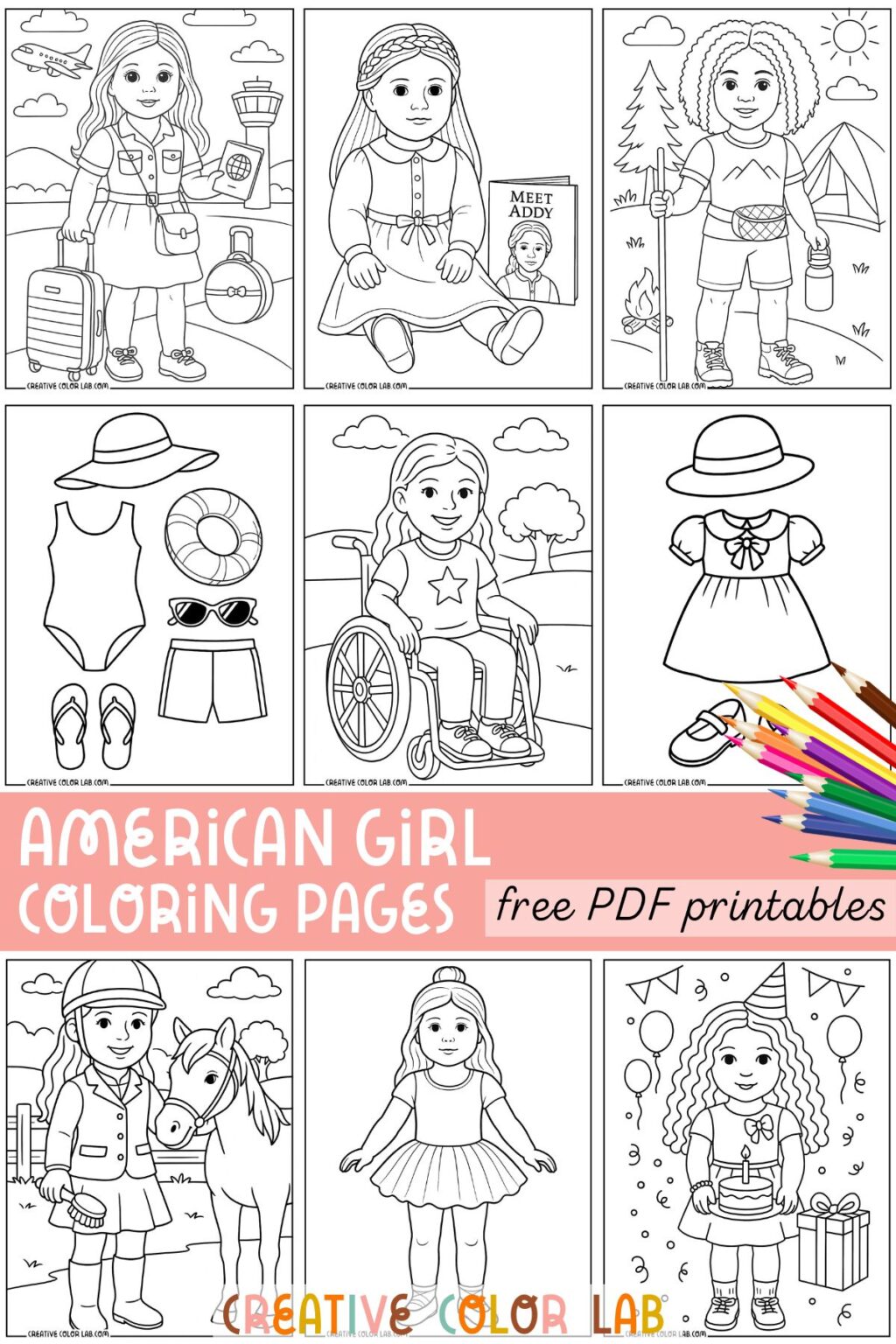
Each illustration contains a single, centered figure surrounded by simple background elements that encourage color selection without overwhelming the page. The line work varies from thick strokes for toddlers to finer details for older children, allowing a seamless transition as skill levels advance. Printable on standard 8.5 × 11‑inch paper, the file can be printed in black‑and‑white or saved for digital coloring on tablets, expanding its utility across diverse learning environments. For more related activities, check out our Letter H Coloring Page.
Key Developmental Benefits
Color recognition emerges early; according to the CDC, **70% of children can name primary colors by age 3**—a milestone that aligns perfectly with the page’s use of red, white, and blue. Engaging with the outlines also strengthens hand‑eye coordination, a prerequisite for later writing tasks. In a recent preschool observation, a group of four‑year‑olds who colored the eagle traced the beak with a crayon, then switched to a marker to outline the wings, demonstrating a natural progression toward a tripod grasp. Additionally, the thematic content sparks cultural curiosity, laying groundwork for narrative skills and historical awareness.
How to Use This Coloring Page
Begin by presenting a brief discussion of the featured symbols, allowing children to share any prior knowledge about the United States. Following the talk, distribute crayons, markers, or watercolor pencils, and encourage free expression rather than strict color matching. For older learners, introduce a palette challenge—select three shades of blue and ask the child to blend them within the sky area, reinforcing color mixing concepts. The activity can be completed individually or as a collaborative class project, with each child contributing a section of the larger scene.
Practical Tips for Parents and Teachers
Rotate the coloring material to promote grip variation; thick‑handed crayons assist toddlers, while fine‑pointed markers benefit kindergarteners refining pencil control. Position the page on a low‑angle table to reduce shoulder strain, a setup recommended by occupational therapists for optimal forearm alignment. When possible, pair the coloring session with a related literacy activity—such as reading a short biography of a historic figure—so the visual experience reinforces language development. Display finished pages on a bulletin board to celebrate effort and provide a reference for future projects.
Age‑Appropriate Recommendations
For toddlers (2–3 years), focus on broad strokes and primary colors; the large outlines accommodate a palmar grasp and support the CDC milestone of basic color naming. Preschoolers (4–5 years) can begin experimenting with shading techniques and incorporate simple pattern recognition, aligning with the NAEYC Developmentally Appropriate Practice framework that emphasizes emergent literacy and fine‑motor precision. Early elementary learners (6–8 years) may add historical facts beside each illustration, integrating research‑based strategies from Reading Rockets that link visual art to reading comprehension.
70% of children can name primary colors by age 3 — CDC
Children who color regularly show higher fine‑motor precision scores — NAEYC
Frequently Asked Questions
Quick answers to common queries about downloading, developmental impact, and trusted guidance.
Explore More Free Printable Coloring Pages
A broader collection of themed sheets can deepen thematic units and keep enthusiasm high. Seasonal celebrations are covered in the Holiday Object series, while a wide range of simple designs lives within the Coloring category. For story‑time extensions, the Character pages feature beloved protagonists that reinforce narrative skills. Animal lovers will appreciate the Animal collection, which blends biodiversity education with artistic practice.
Discover the free American Girl Coloring Page for ages 2–8, packed with developmental benefits, classroom tips, and age‑appropriate guidance to boost color recognition, fine‑motor skills, and cultural awareness. Q: How can the coloring page be downloaded and printed? A: Click the download button, save the PDF, and print on standard 8.5 × 11‑inch paper; double‑sided printing is optional. Q: In what ways does coloring support fine motor and creative development? A: Coloring refines grip strength, hand‑eye coordination, and visual‑spatial reasoning while encouraging personal expression and problem‑solving. Q: Which organization provides reliable guidance on early childhood art activities? A: The National Association for the Education of Young Children (NAEYC) offers evidence‑based recommendations for developmentally appropriate art experiences.
Key Specifications & Age-Group Overview
| Age / Grade Group | Target Skill Focus | Recommended Medium |
|---|---|---|
| Toddlers (Ages 2–4) | Hand-eye coordination & broad motor grasp | Jumbo crayons & washable finger paints |
| Early Elementary (Ages 5–7) | Line boundaries & fine pencil control | Standard colored pencils & fine-tip markers |
| Intermediate (Ages 8+) | Color blending, shading & artistic patience | Watercolor pencils, gel pens & dual-brush markers |