Introduction
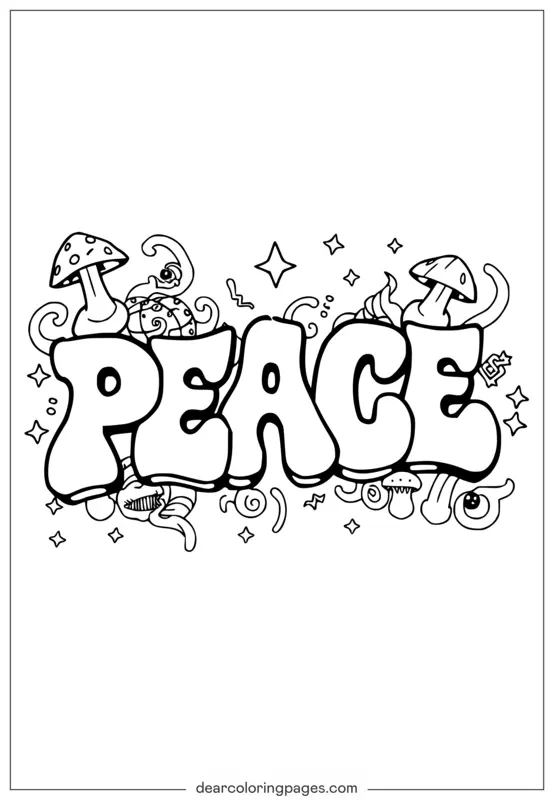
The “trippy aesthetic color pages” collection offers a vibrant gateway for young explorers to experiment with hue, pattern, and form. Designed for children ages 2–8, each printable invites a quiet moment of focus while simultaneously sparking imagination. When the page lands on a table, crayons, markers, or watercolor pencils become tools for discovery, and the swirling designs act as a gentle scaffold for emerging motor and cognitive skills.
💡 Activity Key Takeaways:
- Core Focus: Printable Trippy Aesthetic Color Pages designed for creative expression and fine-motor coordination.
- Target Scope: Ideal for toddlers, preschool, kindergarten, and classroom art activities.
- Best Recommendation: Use standard heavy printer paper (24–28 lb) or cardstock for vibrant results with crayons, colored pencils, or washable markers.
What This Coloring Page Features
A kaleidoscopic blend of swirling spirals, geometric shapes, and whimsical creatures creates a visual rhythm that holds a child’s attention without overwhelming the senses. The outlines are bold enough for a toddler’s shaky hand, yet intricate enough to challenge a preschooler seeking detail. Elements such as friendly monsters, stylized suns, and abstract floral motifs echo the popular Character and Animal categories, encouraging connections across thematic collections.
Key Developmental Benefits
Coloring promotes hand‑eye coordination as the eye tracks the line while the hand follows, reinforcing the neural pathways identified in the CDC’s early‑development milestones. Fine‑motor refinement is evident when a child switches from a fist grip to a tripod grip, a transition that typically emerges between ages three and four. The repetitive motion of filling shapes also builds grip strength, a prerequisite for later writing tasks. Beyond the physical, the act of choosing colors supports language development; children often label “magenta” or “turquoise,” expanding their vocabulary in a context that feels playful rather than instructional. For more related activities, check out our American Girl Coloring Pages.
How to Use This Coloring Page
Begin by selecting a quiet corner where the child can work without interruption. Print the page on standard 8.5 × 11‑inch paper, then lay out a small assortment of coloring tools. Encourage the child to explore the page freely for a few minutes before introducing a specific goal, such as completing one spiral or matching complementary colors. This approach respects the natural flow of curiosity while still providing a scaffolded objective.
Practical Tips for Parents and Teachers
Rotate the coloring materials every week to keep the sensory experience fresh; a set of thick‑bodied crayons one day, liquid watercolors the next. Pair the activity with a brief discussion about the shapes being filled—ask, “What does this swirl remind you of?” to nurture descriptive language. For group settings, place a large printed version on a easel and invite children to take turns adding color, fostering turn‑taking and cooperative play. When the child finishes, display the artwork on a bulletin board to reinforce pride and encourage peer admiration.
Age‑Appropriate Recommendations
For toddlers (2–3 years), the emphasis should be on large‑scale coloring with chunky crayons, allowing the child to experience the tactile feedback of marking a surface. At this stage, the NAEYC Developmentally Appropriate Practice (DAP) framework highlights the importance of sensory exploration, so the page’s bold outlines align perfectly with that goal. Preschoolers (4–5 years) can experiment with more precise tools like fine‑tip markers, focusing on staying within lines and differentiating warm from cool hues. Early elementary learners (6–8 years) may add shading techniques or create patterned backgrounds, extending the activity into early art concepts.
1 in 5 children — CDC
Up to 20% improvement in fine‑motor skills — American Occupational Therapy Association (AOTA)
Frequently Asked Questions
Answers to common queries about the printable and its educational value.
Explore More Free Printable Coloring Pages
The “trippy aesthetic color pages” sit alongside a broader library of themed designs. Holiday celebrations become more vivid with the Holiday Object set, while endless variety awaits in the Coloring category. Each page is crafted to support the same developmental milestones, ensuring continuity across interests and seasons.
Discover the free printable “trippy aesthetic color pages” for ages 2–8, designed to boost fine‑motor skills, color recognition, and creativity through engaging, psychedelic designs. Q: How can the page be downloaded and printed? A: Click the download button, save the PDF, and print on standard 8.5 × 11‑inch paper using any home printer. Q: In what ways does coloring support fine‑motor and creative development? A: Coloring strengthens hand muscles, refines grip, and encourages color selection, all of which promote coordination and imaginative expression. Q: Which trusted organization confirms the developmental benefits of coloring? A: The American Occupational Therapy Association (AOTA) cites up to a 20% improvement in fine‑motor skills through purposeful play.
Key Specifications & Age-Group Overview
| Age / Grade Group | Target Skill Focus | Recommended Medium |
|---|---|---|
| Toddlers (Ages 2–4) | Hand-eye coordination & broad motor grasp | Jumbo crayons & washable finger paints |
| Early Elementary (Ages 5–7) | Line boundaries & fine pencil control | Standard colored pencils & fine-tip markers |
| Intermediate (Ages 8+) | Color blending, shading & artistic patience | Watercolor pencils, gel pens & dual-brush markers |