Introduction
A printable “scenery coloring page” offers more than a moment of quiet amusement; it opens a gateway to motor refinement, visual discrimination, and imaginative storytelling. When children dip a crayon into a sky‑blue meadow or a sun‑kissed hill, they are simultaneously practicing the skills that lay the foundation for later academic success. This article unpacks the layers of benefit hidden within a single sheet of paper, supplying educators and families with concrete strategies to turn a simple coloring activity into a purposeful learning experience.
💡 Activity Key Takeaways:
- Core Focus: Printable Scenery Coloring Pages designed for creative expression and fine-motor coordination.
- Target Scope: Ideal for toddlers, preschool, kindergarten, and classroom art activities.
- Best Recommendation: Use standard heavy printer paper (24–28 lb) or cardstock for vibrant results with crayons, colored pencils, or washable markers.
What This Coloring Page Features
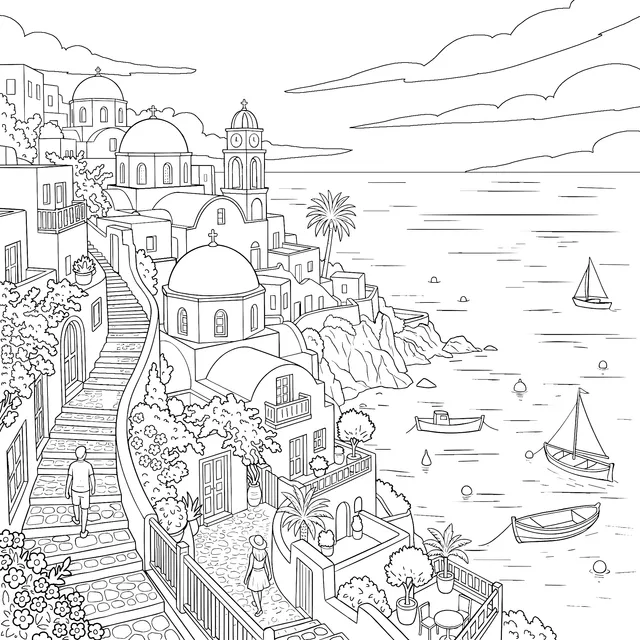
The scenery design blends a rolling landscape, a winding river, and a cluster of friendly trees, each outlined with bold, clean lines that invite confident strokes. Elements are deliberately spaced to reduce visual clutter, allowing tiny hands to focus on one region at a time. The page is formatted for 8.5 × 11‑inch printing, ensuring a familiar size that fits standard home and classroom printers. Moreover, the design is royalty‑free, meaning it can be reproduced without licensing concerns—an advantage for budget‑conscious homeschoolers and school districts alike.
Key Developmental Benefits
Coloring a detailed scene nurtures fine‑motor precision. The act of gripping a crayon, applying pressure, and following a curved line strengthens the intrinsic hand muscles needed for later pencil work. A single session also sharpens hand‑eye coordination as children match hue to object while navigating the page’s contours. Beyond the physical, the activity stimulates language development; describing a “sparkling river” or “fluffy clouds” expands vocabulary and encourages sentence formation. Creative thinking flourishes as children decide whether to render a sunset in warm oranges or cool purples, a choice that reflects early problem‑solving and aesthetic judgment.
How to Use This Coloring Page
Begin by introducing the scene in a brief, open‑ended dialogue. Ask children what they notice first, then invite them to select a color palette. Provide a variety of writing tools—thick‑bodied crayons for younger toddlers, fine‑point markers for older preschoolers—to accommodate differing grip strengths. Allow the coloring process to unfold without interruption; the duration can range from five minutes for a two‑year‑old to thirty minutes for an eight‑year‑old, aligning with each child’s attention span.
Practical Tips for Parents and Teachers
1. Model a single stroke before releasing the crayon, demonstrating how to stay within the line while maintaining a relaxed grip. 2. Rotate colors to prevent “color fatigue,” a phenomenon where children lose interest after repeatedly using the same hue. 3. Integrate a brief “color‑talk” segment after coloring—ask, “What does the river feel like?”—to reinforce sensory language. 4. Display finished pages on a classroom bulletin board or a home fridge; the visual acknowledgment reinforces pride and encourages repeated attempts. For themed extensions, explore the Holiday Object collection or the Animal series, which can be blended into a larger unit on ecosystems.
Age‑Appropriate Recommendations
The National Association for the Education of Young Children (NAEYC) Developmentally Appropriate Practice framework stresses that activities must align with children’s evolving abilities. For toddlers (2‑3 years), focus on large‑scale coloring using broad strokes; the emphasis is on grip development rather than staying inside the lines. Preschoolers (4‑5 years) benefit from guided color naming and can handle more intricate sections of the scenery, such as the winding river. Early elementary students (6‑8 years) can be challenged to add details—tiny flowers, birds, or a sun‑burst—encouraging fine‑motor precision and narrative composition.
85% of children ages 3‑5 can copy a simple shape — CDC
According to the CDC, this milestone often coincides with the emergence of a mature tripod grasp, a hand position essential for successful writing. When children practice coloring within defined boundaries, they reinforce this grasp while simultaneously expanding visual‑motor integration. The American Occupational Therapy Association (AOTA) notes that such play‑based tasks improve hand strength and coordination, skills directly transferable to classroom writing tasks.
20% increase in vocabulary when colors are named during play — Reading Rockets
Reading Rockets highlights that intentional color‑labeling during coloring sessions accelerates language acquisition, particularly for children who are still developing expressive vocabulary. By pairing each hue with a descriptive adjective—“bright turquoise river” or “soft amber hill”—adults create a rich linguistic environment that supports both phonemic awareness and semantic growth.
Frequently Asked Questions
Answers are concise to aid quick reference while still delivering essential guidance.
Explore More Free Printable Coloring Pages
The scenery page is only the beginning of a vibrant library of resources. For broader thematic units, consider the Coloring category, which aggregates seasonal and abstract designs perfect for interdisciplinary lessons. The Character collection introduces familiar storybook figures, allowing educators to weave literacy objectives into the coloring routine. Together, these free printables provide a flexible toolkit that can be tailored to any curriculum, whether it emphasizes science, art, or social‑emotional learning.
Discover the developmental power of a free printable scenery coloring page for ages 2‑8. Learn how coloring enhances fine motor skills, language, and creativity, with practical tips for parents, teachers, and homeschoolers. Q: How can the coloring page be downloaded and printed? A: Click the download button on the site, save the PDF, and print on standard 8.5 × 11‑inch paper using any home or school printer. Q: In what ways does coloring support fine motor and creative development? A: Coloring refines grip strength, hand‑eye coordination, and encourages decision‑making about color choices, fostering both motor precision and imaginative thinking. Q: Which organization recommends coloring for early childhood development? A: The National Association for the Education of Young Children (NAEYC) includes guided art activities like coloring in its Developmentally Appropriate Practice guidelines.
Key Specifications & Age-Group Overview
| Age / Grade Group | Target Skill Focus | Recommended Medium |
|---|---|---|
| Toddlers (Ages 2–4) | Hand-eye coordination & broad motor grasp | Jumbo crayons & washable finger paints |
| Early Elementary (Ages 5–7) | Line boundaries & fine pencil control | Standard colored pencils & fine-tip markers |
| Intermediate (Ages 8+) | Color blending, shading & artistic patience | Watercolor pencils, gel pens & dual-brush markers |