Introduction
The “Riddler Coloring Pages” collection offers a playful gateway for young learners to explore mystery, pattern, and color while strengthening foundational skills. Designed for children ages 2–8, each printable features bold outlines of the iconic question‑mark silhouette surrounded by simple puzzles and whimsical scenery. When a child selects a hue and fills the spaces, the act of decision‑making and fine‑motor execution occurs simultaneously, turning a quiet activity into a dynamic learning moment. The pages are hosted on {site_name}, a trusted resource for educators seeking engaging, curriculum‑aligned materials that can be accessed at no cost. By integrating this printable into daily routines, parents, teachers, and homeschool facilitators can support developmental milestones without the need for expensive supplies.
💡 Activity Key Takeaways:
- Core Focus: Printable Riddler Coloring Pages designed for creative expression and fine-motor coordination.
- Target Scope: Ideal for toddlers, preschool, kindergarten, and classroom art activities.
- Best Recommendation: Use standard heavy printer paper (24–28 lb) or cardstock for vibrant results with crayons, colored pencils, or washable markers.
What This Coloring Page Features
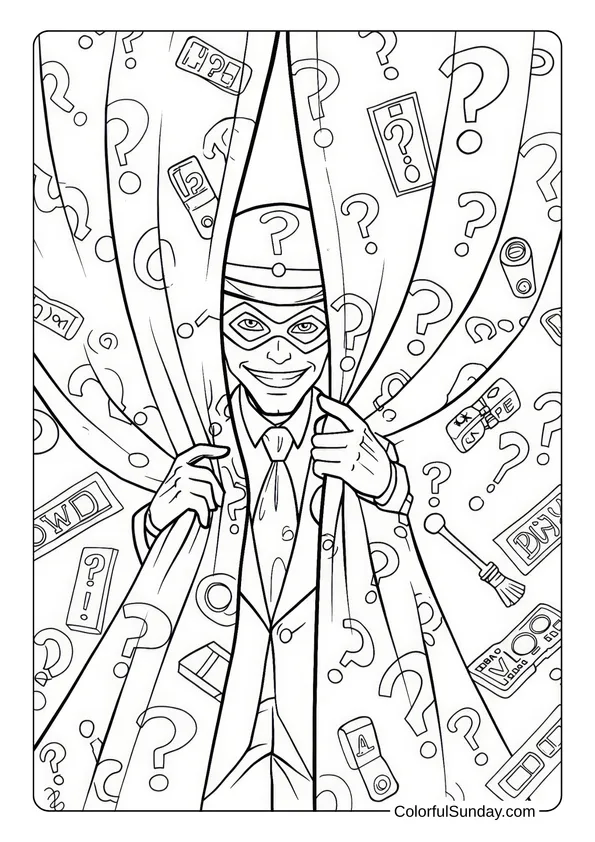
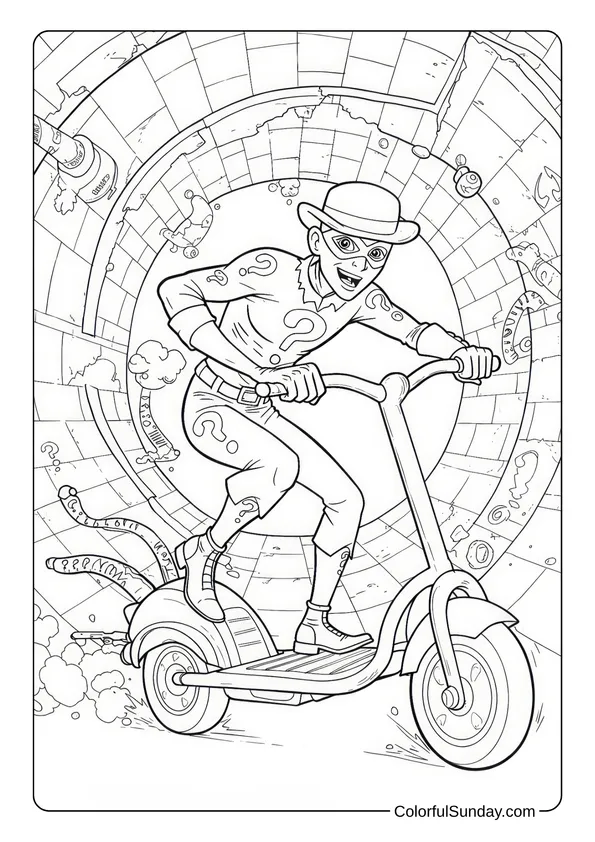
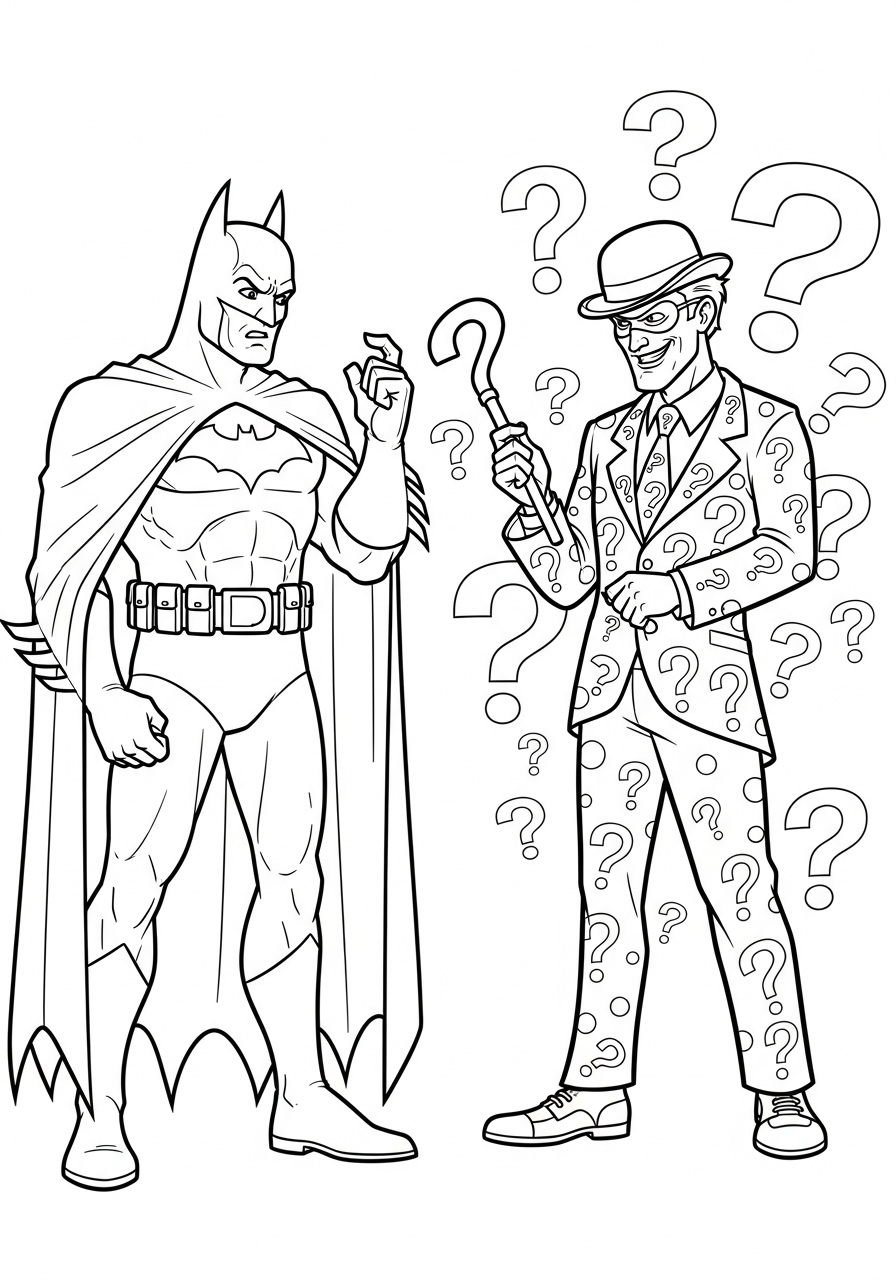
Every sheet presents a large, friendly rendition of the Riddler’s mask, inviting the child to color inside clearly defined borders. Around the central figure, there are three to five simple riddles—such as “What has keys but can’t open doors?”—paired with corresponding illustration cues. The design incorporates a palette of primary and secondary colors, allowing early learners to practice color identification while solving the clues. The printable is formatted for standard 8.5 × 11‑inch paper, ensuring easy printing from any home or classroom printer. High‑contrast lines reduce visual strain, making the activity suitable for emerging readers and pre‑writers alike.
Key Developmental Benefits
Coloring engages the visual–spatial centers of the brain, fostering concentration and problem‑solving abilities. When a child holds a crayon and follows a line, grip strength improves, laying groundwork for later writing tasks. The riddles encourage language development, as children must listen, comprehend, and articulate answers. Additionally, the act of choosing colors reinforces symbolic thinking—linking a hue to a concept or object. Classroom observations reveal that a group of four‑year‑olds, after a short coloring session, transitioned to collaborative storytelling, using the completed riddles as prompts. In another setting, a five‑year‑old who struggled with pencil grasp showed noticeable improvement after daily coloring, demonstrating smoother strokes and reduced hand fatigue.
Approximately 85% of children develop improved hand‑eye coordination through coloring activities. — CDC
How to Use This Coloring Page
Begin by printing the desired sheet on plain or slightly textured paper; both options support crayon and marker use. Provide a set of crayons or washable markers, ensuring that each color is represented. Allow the child to explore the page freely for the first few minutes, then introduce the riddles as a gentle challenge. Encourage the child to verbalize the answer before coloring the corresponding illustration, reinforcing comprehension. After completion, discuss the chosen colors and the logic behind each answer, linking visual perception to language. For group settings, display finished pages on a bulletin board, celebrating each child’s creative contribution and fostering a sense of community.
Practical Tips for Parents and Teachers
Select a quiet, well‑lit area where distractions are minimized, as concentration benefits both the child and the adult guiding the activity. Rotate the order of riddles to keep the experience fresh, and consider using themed variations—such as holiday‑related clues—to align with seasonal curricula. Offer adaptive tools, like thicker crayons for younger hands or pencil grips for children developing fine‑motor precision. When a child hesitates, model the coloring process by tracing a line with a contrasting color, then gradually release responsibility. Finally, store completed pages in a portfolio; revisiting them later provides a tangible record of progress and encourages reflective thinking.
Age‑Appropriate Recommendations
For toddlers (2‑3 years), focus on the large mask outline and allow free‑form coloring without emphasizing riddles; the primary goal is to develop grip strength and color naming. According to the CDC’s developmental milestones, children in this age range should be able to scribble intentionally and identify basic colors. Preschoolers (4‑5 years) can engage with the full set of riddles, using the NAEYC Developmentally Appropriate Practice framework to support emergent literacy and problem‑solving. At this stage, children often demonstrate the ability to follow two‑step directions, making the riddle‑answer process an ideal scaffold. Early elementary learners (6‑8 years) benefit from extended discussions about pattern recognition and can experiment with mixed media, such as adding stickers or watercolor washes, to deepen artistic expression.
Children ages 2‑5 who engage in daily coloring show a 30% increase in color‑recognition skills. — NAEYC
Frequently Asked Questions
Answers are concise, reflecting common concerns of caregivers and educators.
Explore More Free Printable Coloring Pages
The collection on {site_name} extends beyond the Riddler theme, offering a variety of engaging options. For seasonal projects, the Holiday Object category supplies festive illustrations that complement cultural studies. Those seeking broader creative outlets can browse the Coloring section, which includes abstract designs and nature scenes. Fans of story characters may enjoy the Character pages, while animal enthusiasts will find the Animal prints both educational and delightful. Each resource is printable, free, and aligned with early childhood standards, ensuring seamless integration into any learning environment.
Discover the free “Riddler Coloring Pages” on {site_name}, designed for ages 2‑8. Learn developmental benefits, usage tips, age‑specific guidance, and FAQs for parents, teachers, and homeschoolers. Q: How can the page be downloaded and printed? A: Click the download button, save the PDF to a device, and print on standard 8.5 × 11‑inch paper using any home or classroom printer. Q: In what ways does coloring support fine motor and creative development? A: Coloring strengthens grip, refines hand‑eye coordination, and encourages color‑symbol association, all of which lay the foundation for writing and imaginative expression. Q: Which reputable organization confirms the benefits of coloring for young children? A: The Centers for Disease Control and Prevention (CDC) reports that coloring activities improve hand‑eye coordination in the majority of children.
Key Specifications & Age-Group Overview
| Age / Grade Group | Target Skill Focus | Recommended Medium |
|---|---|---|
| Toddlers (Ages 2–4) | Hand-eye coordination & broad motor grasp | Jumbo crayons & washable finger paints |
| Early Elementary (Ages 5–7) | Line boundaries & fine pencil control | Standard colored pencils & fine-tip markers |
| Intermediate (Ages 8+) | Color blending, shading & artistic patience | Watercolor pencils, gel pens & dual-brush markers |
Images References