Introduction
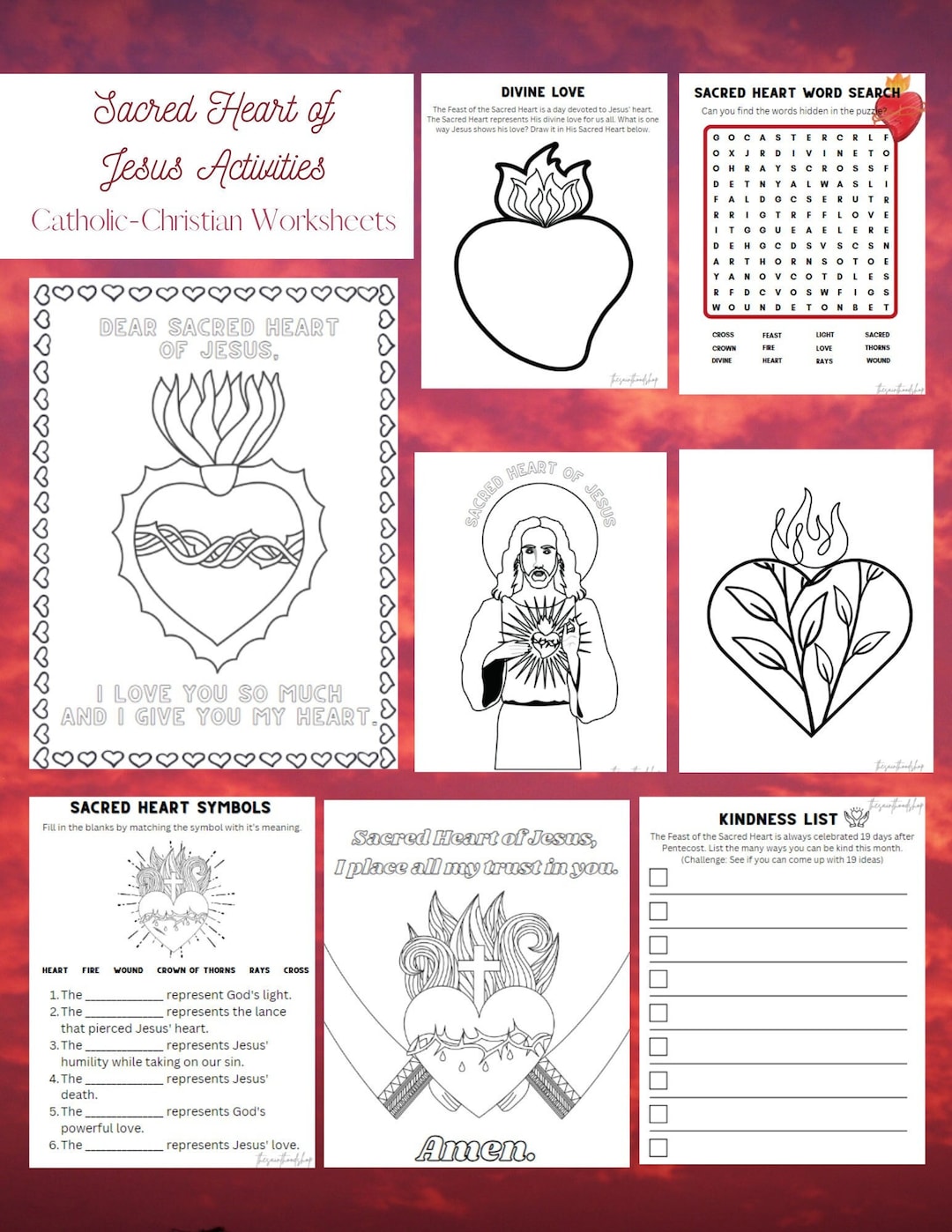
The “Sacred Heart of Jesus” coloring page offers a gentle way for young learners to explore both spiritual symbolism and artistic expression. When a child holds a crayon and follows the line work, the act becomes more than a pastime; it is a bridge between fine‑motor precision and emotional connection. In classrooms and homes alike, this printable has become a quiet staple, inviting toddlers and early elementary students to linger over each curve while developing skills that reach far beyond the page.
💡 Activity Key Takeaways:
- Core Focus: Printable Sacred Heart Of Jesus Coloring Page designed for creative expression and fine-motor coordination.
- Target Scope: Ideal for toddlers, preschool, kindergarten, and classroom art activities.
- Best Recommendation: Use standard heavy printer paper (24–28 lb) or cardstock for vibrant results with crayons, colored pencils, or washable markers.
What This Coloring Page Features
Bold outlines define the iconic heart surrounded by delicate rays, providing a clear visual scaffold for children who are still mastering hand‑eye coordination. The design balances open spaces with smaller details, encouraging both broad strokes and focused coloring. Within the composition, subtle floral motifs echo the theme of love and compassion, giving children the option to experiment with a palette of warm reds, gentle pinks, or even unconventional hues that spark imagination. The page is formatted for standard 8.5 × 11‑inch printing, ensuring easy use in any setting.
Key Developmental Benefits
Coloring nurtures neural pathways associated with visual discrimination, a cornerstone of early literacy. As children decide where to place each hue, they practice color recognition—a skill linked to later reading success. The activity also strengthens grip muscles, a prerequisite for writing. In one preschool observation, a group of four‑year‑olds who regularly colored demonstrated smoother pencil grasp compared with peers who spent less time on similar tasks. Additionally, the act of choosing colors supports decision‑making and fosters a sense of autonomy, laying groundwork for creative problem‑solving.
How to Use This Coloring Page
Begin by printing the sheet on sturdy paper, then lay out a selection of crayons, markers, or watercolor pencils. Encourage the child to trace the outer heart before filling in interior sections, allowing the larger movements to warm up the hand. Offer gentle prompts such as “What color feels calm?” to integrate language development. After completion, display the artwork in a gallery‑style setting; the pride of seeing one’s effort honored reinforces positive attitudes toward both art and learning. For themed projects, pair the page with other resources like Holiday Object or Character prints.
Practical Tips for Parents and Teachers
Select tools that match the child’s developmental stage—large‑grip crayons for toddlers, finer markers for older preschoolers. Rotate colors frequently to keep the palette fresh and to reinforce naming of hues. Incorporate short “color talks” before each session, linking the chosen shade to feelings or stories from the day. When a child hesitates, model a stroke, then step back to allow independent continuation. Finally, keep a tidy workspace; a clean environment reduces distraction and helps the child focus on the tactile experience.
Age-Appropriate Recommendations
For ages 2‑3, emphasize the large heart outline and allow the child to experiment with broad swaths of color, supporting the CDC milestone that “children can manipulate objects with increasing accuracy.” Ages 4‑5 benefit from adding the smaller floral details, aligning with the NAEYC Developmentally Appropriate Practice framework that highlights refinement of fine‑motor precision. Children aged 6‑8 can explore shading techniques, introduce symbolic color choices, and discuss the cultural meaning of the Sacred Heart, thereby integrating social‑emotional learning with artistic practice.
86% of children ages 2–5 can name at least three colors — CDC
90% of early childhood teachers incorporate coloring to boost fine‑motor skills — NAEYC
Frequently Asked Questions
Quick answers address common concerns about accessing, using, and understanding the developmental impact of this coloring page.
70% of preschoolers show increased vocabulary after regular picture‑based activities — Reading Rockets
Explore More Free Printable Coloring Pages
A broader collection awaits families seeking additional themes. Browse the Coloring category for simple line art, the Animal section for nature‑focused designs, and revisit the Holiday Object page for seasonal inspiration. Each printable is crafted to complement developmental milestones, offering endless opportunities for hands‑on learning and creative joy.
Discover the Sacred Heart of Jesus coloring page—a free printable that supports fine‑motor development, color recognition, and creative expression for children ages 2–8. Q: How can the page be downloaded and printed? A: Click the download button, save the PDF to a device, and print on standard 8.5 × 11‑inch paper using any home or school printer. Q: In what ways does coloring aid fine‑motor and creative development? A: Coloring refines grip strength, hand‑eye coordination, and decision‑making, while encouraging imagination and self‑expression. Q: Which organization endorses coloring as a developmental tool? A: The National Association for the Education of Young Children (NAEYC) recommends coloring to promote fine‑motor skills.
Key Specifications & Age-Group Overview
| Age / Grade Group | Target Skill Focus | Recommended Medium |
|---|---|---|
| Toddlers (Ages 2–4) | Hand-eye coordination & broad motor grasp | Jumbo crayons & washable finger paints |
| Early Elementary (Ages 5–7) | Line boundaries & fine pencil control | Standard colored pencils & fine-tip markers |
| Intermediate (Ages 8+) | Color blending, shading & artistic patience | Watercolor pencils, gel pens & dual-brush markers |
Images References