Introduction
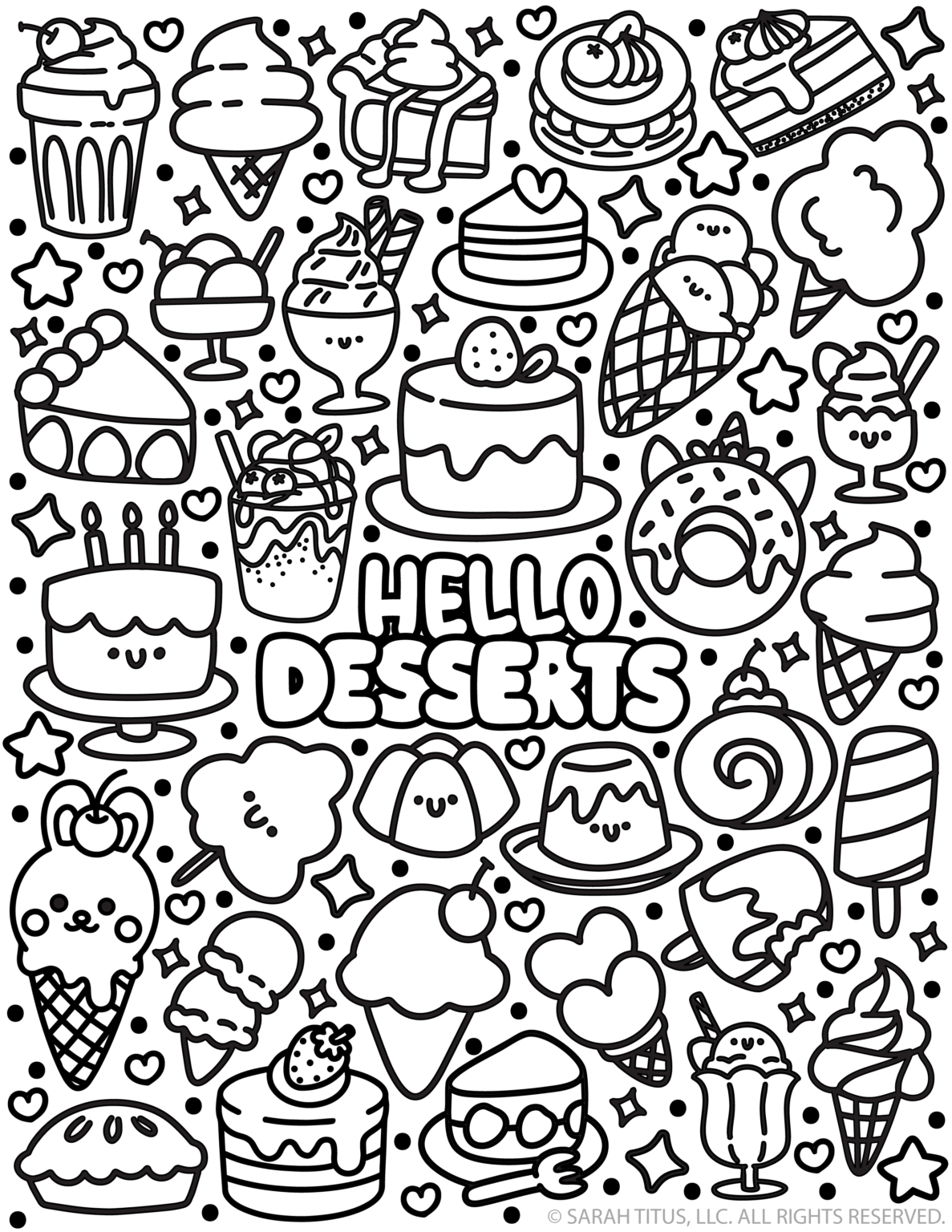
The “Dessert Kawaii Food Coloring Pages” collection offers a charming blend of cute pastries, smiling cupcakes, and cheerful ice‑cream cones, each rendered in a soft, child‑friendly line style. Designed for early childhood settings, the printable sheets invite toddlers and preschoolers to explore color, shape, and texture while reinforcing foundational skills that support later academic success. When children choose a pastel pink for a strawberry shortcake or a bright turquoise for a popsicle, they are not merely filling spaces—they are practicing decision‑making, building visual discrimination, and laying the groundwork for fine‑motor precision. The pages are free to download, print on standard 8.5×11‑inch paper, and can be incorporated into classroom centers, home art stations, or homeschooling curricula with ease.
💡 Activity Key Takeaways:
- Core Focus: Printable Dessert Kawaii Food Coloring Pages designed for creative expression and fine-motor coordination.
- Target Scope: Ideal for toddlers, preschool, kindergarten, and classroom art activities.
- Best Recommendation: Use standard heavy printer paper (24–28 lb) or cardstock for vibrant results with crayons, colored pencils, or washable markers.
What This Coloring Page Features
Each illustration showcases a single dessert character framed by whimsical elements such as sprinkles, heart‑shaped clouds, and tiny bows. The line work is bold enough for little hands to stay within boundaries, yet detailed enough to encourage curiosity about line thickness and pattern. A variety of food items—from macarons to doughnuts—provides opportunities to discuss taste, texture, and cultural origins, turning a simple coloring activity into an interdisciplinary lesson. The designs are organized in a printable PDF that includes a front‑side reference sheet listing suggested color palettes, which helps educators align the activity with color‑recognition goals. For added variety, the collection links to related themes such as holiday object and animal pages, allowing seamless transitions between topics.
Key Developmental Benefits
Coloring supports a spectrum of developmental domains. Visual‑motor integration strengthens as children coordinate eye movement with hand pressure, a skill that predicts later writing readiness. Grip strength improves when crayons or markers are held for extended periods, laying the foundation for pencil grasp. Creative expression flourishes as children experiment with unconventional color choices, fostering divergent thinking and problem‑solving. Socially, sharing crayons and discussing favorite desserts nurtures language development and peer interaction. Research underscores these connections:
75% of children aged 3‑5 use coloring to practice hand‑eye coordination — AOTA
and
85% of preschoolers can identify primary colors when given visual cues — CDC
demonstrate the widespread impact of coloring on early skill acquisition.
How to Use This Coloring Page
Begin by selecting a quiet, well‑lit area where the child can focus without distractions. Provide a range of coloring tools—crayons, washable markers, and thick‑bodied colored pencils—to accommodate different grip strengths and sensory preferences. Encourage the child to name each dessert before applying color, reinforcing vocabulary related to food and emotions. Once the page is complete, display the artwork on a bulletin board or in a classroom gallery; recognition of effort boosts self‑esteem and motivates continued engagement. For educators, the pages can serve as entry points for math concepts such as counting sprinkles or sorting colors, while homeschoolers might integrate them into weekly reading circles that explore storybooks about sweets.
Practical Tips for Parents and Teachers
Rotate the coloring sheets regularly to maintain novelty and prevent frustration. Pair the activity with a brief discussion about healthy eating habits, using the desserts as a springboard for conversation rather than endorsement. Offer a “color of the day” challenge to expand the child’s palette and reinforce color‑name association. When a child struggles with staying inside the lines, model the technique by tracing a single shape, then gradually release responsibility. Keep a small “art kit” containing wipes, a drying rack, and a storage box for completed pages, ensuring the environment remains tidy and the child feels proud of their creations. For further inspiration, explore additional printable resources in the Coloring category.
Age‑Appropriate Recommendations
Toddlers (2‑3 years) benefit most from large‑scale desserts with minimal detail, allowing them to practice broad strokes and basic color identification. According to the CDC’s developmental milestones, children at this age are beginning to use crayons to make simple marks, a skill that aligns with the bold outlines of the kawaii treats. Preschoolers (4‑5 years) can handle more intricate designs that include multiple elements, supporting the development of fine‑motor precision and the ability to follow multi‑step instructions. The NAEYC Developmentally Appropriate Practice framework emphasizes that art experiences should be “meaningful, culturally relevant, and developmentally suitable,” making the dessert theme an ideal fit for diverse classroom settings. Early elementary students (6‑8 years) may use the pages as a base for mixed‑media projects, adding stickers, glitter, or collage to extend creative exploration.
Frequently Asked Questions
Below are common queries from parents, teachers, and homeschool families, each answered concisely to facilitate quick reference.
Explore More Free Printable Coloring Pages
The “Dessert Kawaii Food Coloring Pages” are just one entry in a broader library of thematic worksheets. For seasonal projects, the Holiday Object collection offers festive motifs that reinforce cultural celebrations. Those seeking character‑driven activities can browse the Character section, where beloved cartoon figures inspire storytelling and role‑play. Finally, the Animal pages provide opportunities to discuss habitats, adaptations, and empathy toward living beings. By rotating among these categories, educators can sustain engagement, reinforce interdisciplinary connections, and nurture a lifelong love of creativity.
Discover the free “Dessert Kawaii Food Coloring Pages” for ages 2‑8. Learn how the printable designs boost fine‑motor skills, color recognition, and creative development, with practical tips and age‑specific guidance for parents, teachers, and homeschoolers. Q: How can the dessert kawaii food coloring page be downloaded and printed? A: Click the download button, save the PDF, open it on a computer, and print on standard 8.5×11‑inch paper using any printer; optionally, fold the sheet for a tabletop activity. Q: In what ways does coloring support fine motor and creative development? A: Coloring refines grip strength, hand‑eye coordination, and visual discrimination while encouraging color experimentation, decision‑making, and self‑expression. Q: Which organization validates the developmental benefits of coloring for young children? A: The American Occupational Therapy Association (AOTA) highlights coloring as a key activity for building hand‑eye coordination and fine‑motor skills.
Key Specifications & Age-Group Overview
| Age / Grade Group | Target Skill Focus | Recommended Medium |
|---|---|---|
| Toddlers (Ages 2–4) | Hand-eye coordination & broad motor grasp | Jumbo crayons & washable finger paints |
| Early Elementary (Ages 5–7) | Line boundaries & fine pencil control | Standard colored pencils & fine-tip markers |
| Intermediate (Ages 8+) | Color blending, shading & artistic patience | Watercolor pencils, gel pens & dual-brush markers |
Images References