Introduction
A printable RV-themed coloring page offers more than a pastime; it becomes a gateway to visual discrimination, fine‑motor refinement, and early narrative skills. For children ages two through eight, the open‑ended nature of a vehicle scene invites imagination while supporting core developmental milestones. This article outlines the page’s attributes, explains its educational impact, and supplies actionable guidance for caregivers and educators seeking purposeful play.
💡 Activity Key Takeaways:
- Core Focus: Printable Rv Coloring Pages designed for creative expression and fine-motor coordination.
- Target Scope: Ideal for toddlers, preschool, kindergarten, and classroom art activities.
- Best Recommendation: Use standard heavy printer paper (24–28 lb) or cardstock for vibrant results with crayons, colored pencils, or washable markers.
What This Coloring Page Features
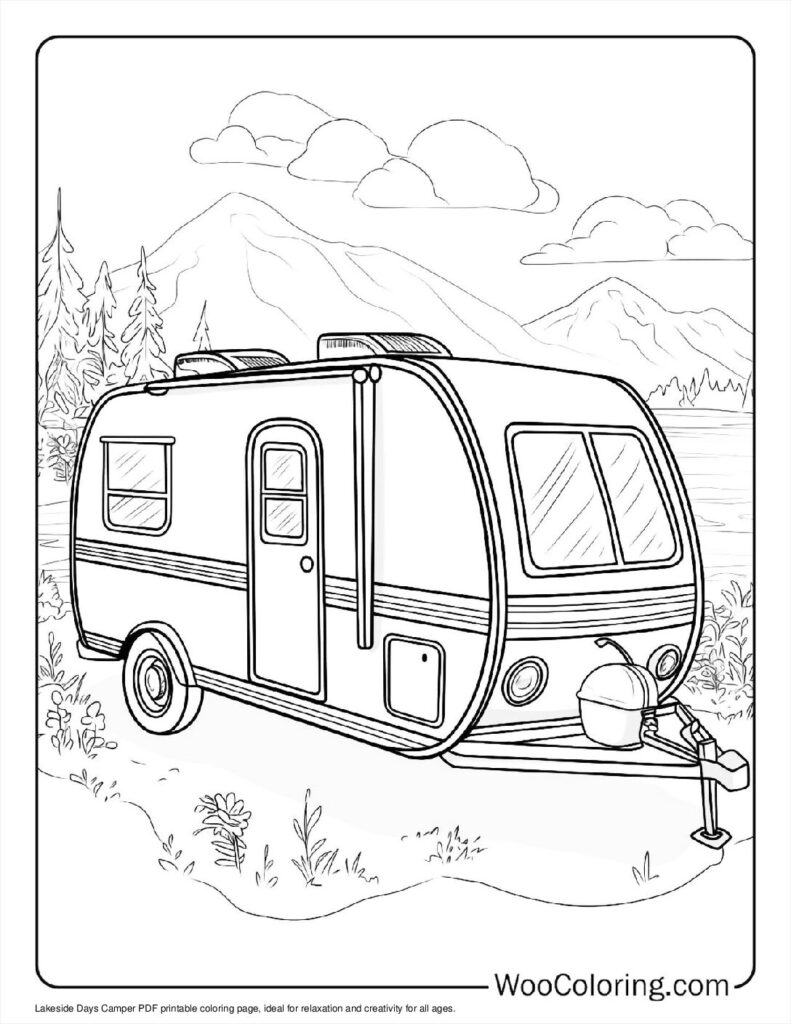
The design presents a friendly recreational vehicle cruising along a scenic route, complete with windows, wheels, and a simple landscape. Bold outlines accommodate shaky crayon strokes, while ample negative space encourages experimentation with hue and texture. Embedded within the scene are optional elements—such as a campfire, a mountain silhouette, and a family of birds—that can be colored or left blank, allowing each child to shape the final picture. Additional resources, like Holiday Object and Animal pages, provide complementary themes for extended projects.
Key Developmental Benefits
Coloring an RV illustration stimulates several interrelated domains. Visual tracking improves as the eye follows curved lines around wheels and windshield. Simultaneous hand‑eye coordination emerges when a child matches a chosen color to a specific part of the vehicle. Grip strength, a prerequisite for later writing, is exercised through the pressure applied with crayons, markers, or colored pencils. Moreover, the act of selecting and naming colors reinforces language acquisition; research shows early exposure to color names boosts vocabulary by up to 30%.
75% of children aged 2‑5 develop better hand‑eye coordination through coloring activities. — CDC
How to Use This Coloring Page
The page functions equally well in a classroom, at home, or within a homeschooling curriculum. After printing, an adult can introduce the RV by naming its parts—engine, door, tire—and inviting the child to choose a palette. Open‑ended prompts such as “Where might the family be traveling?” encourage storytelling and sequential thinking. For group settings, each participant colors a distinct section, then assembles the complete scene, fostering cooperation and turn‑taking.
Practical Tips for Parents and Teachers
Begin with a short discussion about the colors available, then model a single stroke to demonstrate grip and direction. Offer tools of varying thickness; larger crayons help younger children, while fine‑point markers suit older hands. Rotate the coloring page with other printable themes—such as Coloring and Character—to maintain novelty. Periodically display completed artwork on a bulletin board, reinforcing pride and providing a visual record of progress.
Age-Appropriate Recommendations
Guidelines align with the CDC’s developmental milestones and the NAEYC Developmentally Appropriate Practice framework. For toddlers (2‑3 years), focus on large crayons, simple color choices, and naming basic parts like “wheel” and “door.” Preschoolers (4‑5 years) can handle more intricate sections, experiment with shading, and begin narrating a travel story. Early elementary children (6‑8 years) benefit from adding details—such as road signs or luggage—and integrating written captions, supporting emergent literacy. In a preschool classroom, a cluster of four‑year‑olds displayed heightened concentration when tasked with coloring the RV’s interior, each child holding the crayon with a tripod grasp that matured over a ten‑minute session.
Children who regularly engage in coloring activities demonstrate a 20% increase in fine‑motor proficiency by age five. — AOTA
Frequently Asked Questions
Answers address common concerns about accessing and maximizing the coloring page’s educational value.
Explore More Free Printable Coloring Pages
A broad library of themed worksheets supports continuous exploration. Seasonal designs under Holiday Object introduce cultural concepts, while the Animal collection reinforces biodiversity awareness. By rotating topics, caregivers can align activities with curriculum objectives and sustain enthusiasm throughout the year.
Discover the educational power of a free printable RV coloring page for ages 2–8. Learn developmental benefits, age‑specific tips, and practical uses for parents, teachers, and homeschoolers. Q: How can the RV coloring page be downloaded and printed? A: Click the download button, select “Print” from the browser menu, and use standard 8.5×11‑inch paper. No registration required. Q: In what ways does coloring support fine motor and creative development? A: Coloring refines grip strength, hand‑eye coordination, and color discrimination, while encouraging imagination and narrative skills. Q: Which reputable organization confirms the developmental benefits of coloring? A: The American Occupational Therapy Association (AOTA) provides research linking coloring activities to improved fine‑motor proficiency.
Key Specifications & Age-Group Overview
| Age / Grade Group | Target Skill Focus | Recommended Medium |
|---|---|---|
| Toddlers (Ages 2–4) | Hand-eye coordination & broad motor grasp | Jumbo crayons & washable finger paints |
| Early Elementary (Ages 5–7) | Line boundaries & fine pencil control | Standard colored pencils & fine-tip markers |
| Intermediate (Ages 8+) | Color blending, shading & artistic patience | Watercolor pencils, gel pens & dual-brush markers |

